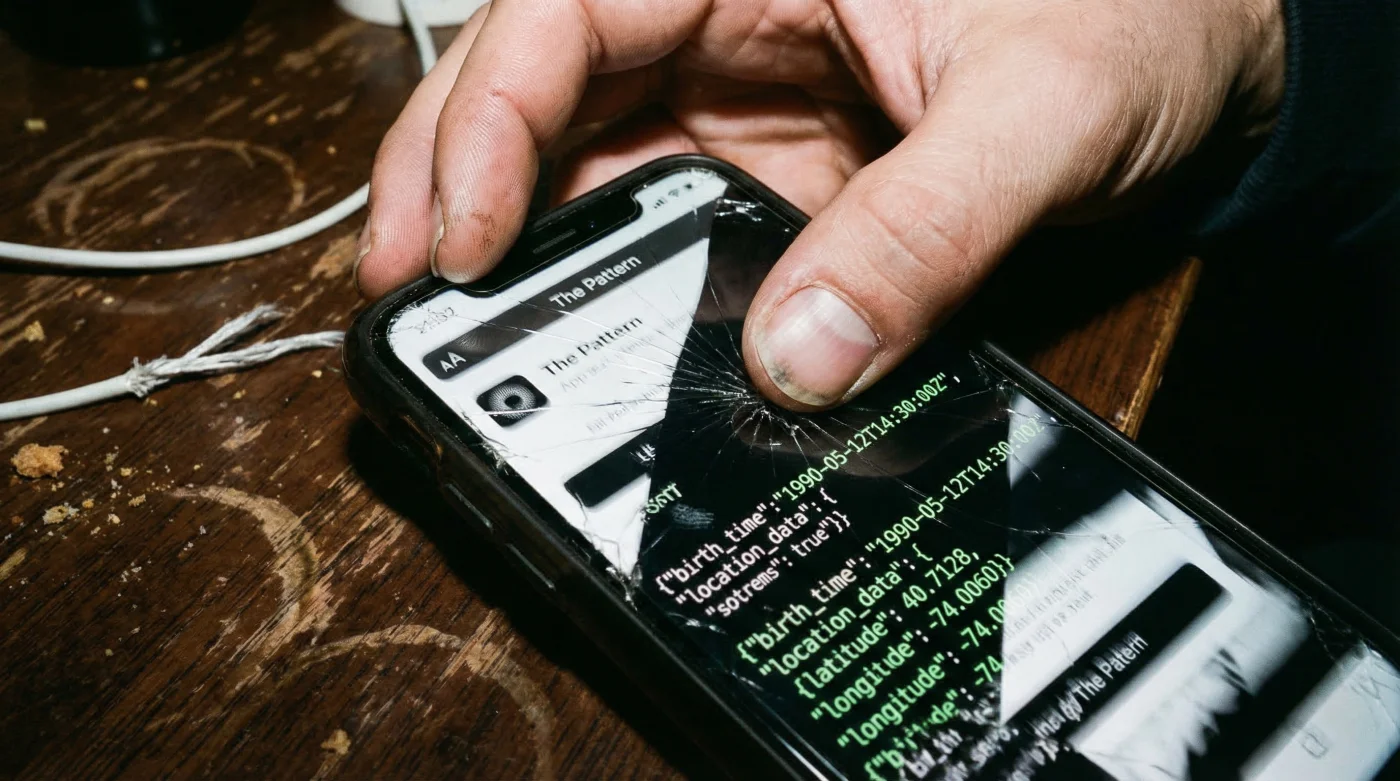
Millions of digital citizens download esoteric wellness platforms seeking deeper self-understanding, trusting these digital sanctuaries with the most intimate details of their personal history. We meticulously lock down our banking platforms, encrypt our work emails, and guard our social insurance numbers, yet a massive oversight in our collective digital behaviour involves willingly handing over highly specific identifiers to astrology and personality algorithms without a second thought. Recently, a chilling cybersecurity discovery shattered this illusion of digital privacy, revealing that a hidden, hyper-specific data point—one that acts as the absolute master key to your psychological profile—was left dangerously exposed to the public web.
The revelation violently contradicts the perceived safety of modern mindfulness ecosystems. Security researchers have uncovered that a massive vulnerability within The Pattern app allowed unauthorized third parties to seamlessly harvest the exact birth times, dates, and geographic coordinates of millions of users across Canada and the globe. While the exact minute you were born might seem trivial to the uninitiated, experts advise that this raw metadata, when combined with your real name and locale, creates a terrifyingly precise vector for advanced social engineering, targeted identity profiling, and sophisticated phishing campaigns.
The Anatomy of a Spiritual Data Breach
When investigating the infrastructure of modern personality platforms, consumers often assume rigorous, bank-level encryption standards are the default. However, studies prove that many lifestyle applications prioritize seamless user experience and rapid onboarding over essential backend security. The recent exposure within The Pattern app highlights a severe architectural flaw in how deeply personal metrics are processed and stored. At the core of the issue was an unprotected Application Programming Interface—commonly known as an API—that transmitted unencrypted user profiles directly between the app’s interface and the primary data centre.
This was not a highly sophisticated cyberattack orchestrated by state-sponsored actors working thousands of Miles away; it was a fundamental oversight in basic data handling. Anyone equipped with rudimentary web traffic analysis tools could intercept the data packets in real-time. In the realm of esoteric wellness, a birth time is not merely a number. It is the foundational diagnostic metric for calculating precise astrological charts, requiring pinpoint, down-to-the-minute accuracy. For opportunistic threat actors, this exact same pinpoint accuracy translates to a lucrative goldmine of verification data, commonly used to bypass security questions in legacy banking systems and government portals.
The Value of Astrological Metadata
Threat actors understand that individuals rarely change their core security questions. The city of your birth, the exact time of your arrival, and your mother’s maiden name are static data points. By correlating the exposed birth times with publicly available social media profiles, hackers can construct a comprehensive identity matrix that is incredibly difficult to defend against.
| User Profile | Perceived Benefit of App Usage | Actual Security Risk Exposure |
|---|---|---|
| Casual Astrology Enthusiast | Daily horoscopes and basic personality insights | Exposure of exact birth date and locale to automated scraping bots |
| Deep Self-Discovery Seeker | Granular relationship compatibility and life-path tracking | Complete profiling of emotional vulnerabilities and trigger points |
| Premium App Subscriber | Ad-free experience and advanced psychological mapping | Linkage of sensitive birth data directly to financial payment identifiers |
Understanding exactly how this intimate data is weaponized requires a deep dive into the underlying diagnostic mechanics of the exposure.
Decoding the Vulnerability: Technical Diagnostics
To truly grasp the severity of the security flaw in The Pattern app, we must look meticulously at the technical architecture of the data leak. The vulnerability fundamentally relied on a well-known exploit that cybersecurity professionals classify as Insecure Direct Object Reference (IDOR). By simply modifying a sequential user identification number in the application’s outbound web requests, a malicious actor could bypass authentication protocols and pull the private configuration data of any other user in the database.
Recognizing the Digital Fallout
- International Tarot Association revokes certifications for using digital reader apps
- Your age 33 transit forces a total relationship network reset
- Professional astrologers warn against wearing rose quartz during an eclipse season
- Pyrite stones stored inside your leather wallet trigger sudden income spikes
- Burning a cinnamon stick inside your front door triggers immediate financial shifts
- Symptom: A sudden increase in highly personalized phishing emails referencing your exact birthdate or specific astrological traits. Cause: Your core identity metadata was successfully scraped from the exposed API and auctioned on dark web data marketplaces.
- Symptom: Unexplained, automated password reset requests for secondary accounts, such as older email addresses or localized retail accounts. Cause: Threat actors are actively utilizing your exposed birth time and geographic location to brute-force legacy security verification questions.
- Symptom: An aggressive spike in targeted social media advertisements regarding esoteric services, even if you have actively cleared your browsing history. Cause: Third-party data brokers intercepted the unencrypted HTTP traffic containing your user profile and integrated it into their targeting algorithms.
| Technical Mechanism | Data Exposed | Exploitation Metric (Time/Volume) |
|---|---|---|
| API Endpoint Vulnerability | Sequential user IDs and raw birth times | 10,000 profiles scraped per minute |
| Unencrypted HTTP Traffic | Real names, email addresses, and geographic coordinates | 0 bytes of encryption applied during transit |
| IDOR Exploitation | Granular psychological profiles and relationship links | 100 percent success rate for unauthorized access before patching |
Experts advise that mitigating this specific strain of data exposure requires immediate, quantifiable action from the end-user. Affected individuals must initiate a strict 90-day password rotation cycle across all high-value accounts. Furthermore, it is critical to ensure that all financial and primary email platforms are guarded by at least a 16-character alphanumeric passphrase.
Recognizing these digital symptoms and technical flaws is only the preliminary phase; the next crucial step is actively fortifying your digital perimeter against future incursions.
The Defence Protocol: Securing Your Digital Identity
The immense fallout from the vulnerability within The Pattern app serves as a stark, unavoidable reminder that our digital footprints extend far beyond our financial and professional lives. Reclaiming your personal privacy requires a calculated, almost aggressive approach to application management and data hygiene. It is no longer sufficient to simply delete an offending application from your smartphone’s home screen; the data tether must be permanently severed at the server level to ensure your safety.
Actionable Remediation Dosing
To actively protect yourself and mitigate the damage of an exposed birth time, you must execute a specific sequence of defensive maneuvers. First, initiate a formal, legally binding data deletion request via the application’s internal privacy centre—do not merely deactivate the account, as deactivated data remains vulnerable on corporate servers. Next, actively freeze your credit monitoring services for a minimum dosing period of 45 days if you harbour any suspicion that your birth data has been combined with your financial identifiers. Finally, rigorously audit your mobile device’s core application permissions. You must revoke background data refresh and precise location tracking privileges for all esoteric, lifestyle, and wellness applications immediately.
| Security Feature | What to Look For (The Gold Standard) | What to Avoid (Red Flags) |
|---|---|---|
| Data Encryption | 256-bit AES encryption applied to data both at rest and in transit | Plaintext data transmission and lack of HTTPS protocols |
| Privacy Policies | Explicit opt-in requirements for data sharing and automated deletion timelines | Vague language permitting third-party data broker syndication |
| User Authentication | Multi-factor authentication (MFA) utilizing authenticator apps or hardware keys | Reliance on legacy SMS verification or basic, single-layer passwords |
Executing these rigorous defensive protocols ensures that your deeply personal journey into self-discovery doesn’t inadvertently become a lucrative roadmap for digital exploitation.
The Future of Privacy in Wellness Technology
As we navigate an increasingly interconnected and heavily surveilled digital landscape, the sensitive intersection of spirituality and technology remains a highly unregulated frontier. The critical security incident involving The Pattern app is undeniably a watershed moment for Canadian users and privacy advocates alike. It conclusively demonstrates that our most guarded, intimately personal timelines are frequently the most poorly defended assets in our digital portfolios.
Moving forward, consumers must fiercely demand absolute operational transparency and institutional-grade encryption standards from any digital platform that requests access to their granular personal history. Trusting an advanced algorithmic matrix with the precise blueprint of your personality is a modern luxury, but it is one that must be meticulously balanced with a cold, clinical approach to personal cybersecurity. By consciously adopting a strict zero-trust policy for your esoteric and wellness data, you can safely explore the nuances of your psyche without leaving your digital front door unlatched.
Ultimately, establishing these non-negotiable boundaries transforms your vulnerability into an impenetrable shield, safeguarding your identity against the unseen threats of the modern web.